
Of course, the choice of curtains is determined by taking into account the stylistic design of the nursery interior, as well as the sex of the child. The decor and color should be chosen according to the character of the little owner of the room. So, if a little princess girl lives in the room, then silk or satin curtains in a delicate color scheme will be appropriate.
The priority criterion for choosing curtains for a nursery should be their quality and practicality. It is necessary to take into account the specifics of the room - curtains in the nursery should be easy to clean. It is worth noting that cleaning curtains can be quite frequent, which must also be taken into account when choosing a material - some fabrics (such as velvet) are not suitable for frequent washing.
Meanwhile, care must be taken to reliably protect furniture and interior items from UV radiation, especially in rooms where the windows "look" to the south. Maximally assembled curtains will allow more natural light to enter the room. By choosing the density of the curtain assembly, you can independently choose the necessary degree of illumination for the nursery.
To date, pleated curtains are the best option for this room. They are made of high-quality fabrics with a special impregnation that does not contain harmful substances that could be released in the sun when heated, and provides the curtains with the ability not to attract dust.
Pleated curtains are truly a real find when decorating non-standard openings. After all, it is not always possible to allocate a separate room for a children's room, often a children's room is organized in a part of a room, or in a loggia or attic with windows located unusually. The production of this type of curtains to order is carried out taking into account all the parameters of a particular window.
The inconvenient location of windows forces developers to come up with new ways to control curtains. Lifting and lowering the curtains that decorate a standard window can also be done by hand using the traditional method. But with a ceiling window it is much more difficult - you will need a remote control system (automatic curtains).
Today it has become possible to install a unique program: The curtains will automatically lower when the natural light is too bright, even in the absence of the owners. Curtains of this type are appropriate in any interior. Today, the stores offer fabrics of various textures and colors. There will be no problems with choosing the right option.
Pleats are not very expensive, despite the fact that they are characterized by high quality and ease of use. Thanks to all this, pleated curtains are the most in demand among all types. Жители в Перми получают доступ к казино через скачать Мелбет казино . Доступны версии для Android, iPhone и ПК. После первого депозита активируется приветственный бонус и фриспины. Кэшбэк начисляется автоматически. Звоните: 8 (800) 100-7234.
Komposition
In Kleingruppen (2 – 4 Personen) werden die persönlichen Arbeiten der Studierenden besprochen. Je nach Semesterstufe werden gezielte oder offene Aufgaben gestellt, die immer genügend Spielraum für vielfältige künstlerische und ästhetische Ausarbeitung offen lassen.
Der individuelle Zugang jedes/jeder Studierenden wird berücksichtigt, gleichzeitig wird versucht, technische oder ästhetische Schemata zu hinterfragen und neue formale und klangliche Zugänge zu finden. Auch die Betreuung der schriftlichen Abschlussarbeit ist Teil dieses Fachs.
Studiotechnik
In dieser Vorlesung werden klassische und experimentelle Methoden der elektroakustischen Transformation, in Realtime und/oder Offline behandelt. Mit den Methoden sind natürlich auch die praktischen Geräte und Maschinen, oder eben die Programme, die Software und deren Bedienung und Handhabung ein Thema. Gegliedert ist die Vorlesung im ersten Semester mit klassisch analogen Instrumenten, wie Tonband, Mischpult, Mikrofone, Analogsynthesizer. Im zweiten Semester werden die Programmiersprachen Max und Pure Data ausgebreitet, mit denen in weiterer Folge dann die einzelnen Transformationstechniken erklärt werden. Weitere Schwerpunkte der Vorlesung sind:
- geschichtliche Darstellung der technischen Entwicklung in der elektroakustischen Musik
- Produktionstechniken im Studio von Mono bis Mehrkanal
- Postproduktion allgemein und speziell in der elektroakustischen Musik
- Zeitparadoxa, Giant FFT etc.
Im Einzelunterricht Praktikum geht es um ein Heranführen an technisch-künstlerischen Umsetzungen. Der/Die Studierende erfährt eine “künstlerische Zusammenarbeit” bei der Entstehung oder Realisierung eigener Projekte.
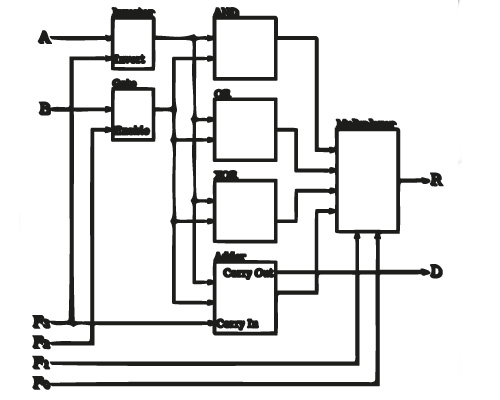
Music Processing
Musikproduktion und Tonverarbeitung durch den Einsatz von Mikroprozessoren und Computern.
Klangsynthese, digitale Filter, digitale Audioeffekte, räumliches Audio.
Sampling, Klangwahrnehmung, Quantisierung, Codierung.
Programmierung: Audio-spezifische Software-Umgebungen, Struktur von Programmen.
Musikinformations-Theorie, computergestützte Komposition, Musik-Informations-Retrieval und Audio-Content-Analyse.
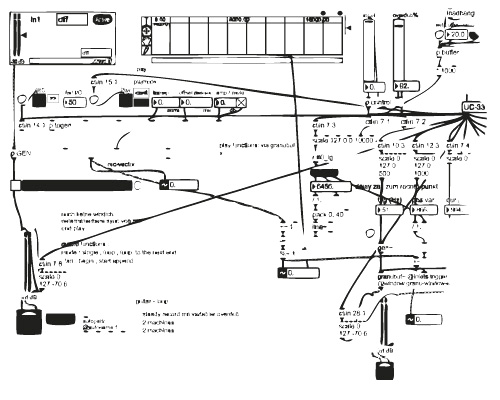
Live-Elektronik
Dieses Seminar setzt sich aus einem theoretischen und einem praktischen Teil zusammen. Einerseits werden Live Elektronische Realisierungen in der zeitgenössischen Musik, als auch in anderen musikalischen Genres wie Performance, Improvisation besprochen, als auch praktische Erfahrung in Konzerten, Klassenabenden gemacht. Methoden von Live Processing werden anhand der Programmiersprache Max besprochen und programmiert.

Akustik
Darstellung des Phänomens “Klang” aus physikalischer Sicht unter der besonderen Berücksichtigung des Zusammenklangs mehrerer Instrumente, Einführung in die Schwingungslehre, Apperzeption akustischer Signale, Elementare Wellenformen der Elektroakustik, physikalische Darstellung der Frequenzverteilung (Sonogramme), Signaldarstellung im Zeitbereich und Frequenzbereich, FFT, akustischer Signatur der Instrumente, Topologie der Instrumentation im klanglichen Kontext, Zusammenklang mehrerer Schallquellen (mögliche gegenseitige Beeinflussungen der Spektren), Klanganalyse ausgewählter Beispiele der Musikliteratur.
Peter Ablinger/ Maryanne Amacher/ Oren Ambarchi/ Laurie Anderson/ Aphex Twin/ Robert Ashley/ Sam Auinger/ Milton Babbitt/ Natasha Barrett/ Louis and Bebe Barron/ William Basinski/ François Bayle/ the Beatles/ William Bennett/ Félix Blume/ Konrad Boehmer/ Pierre Boulez/ Gavin Bryars/ Earle Brown/ Herbert Brün/ William S. Burroughs/ John Cage/ Janet Cardiff/ Wendy Carlos/ Carl Michael von Hausswolff/ Angélica Castelló/ Michel Chion/ Henri Chopin/ John Chowning/ Nicolas Collins/ Tony Conrad/ Peter Cusack/ Pan Daijing/ Paul DeMarinis/ DJ Spooky/ Francis Dhomont/ John Duncan/ Brian Eno/ Franco Evangelisti/ Farmers Manual/ Morton Feldman/ Mark Fell/ Christian Fennesz/ Luc Ferrari/ Beatriz Ferreyra/ Klaus Filip/ Bill Fontana/ Stefan Fraunberger/ Glenn Gould/ Thomas Grill/ Florian Hecker/ Robert Henke/ Pierre Henry/ Christoph Herndler/ Dick Higgings/ Concepción Huerta/ Ryoji Ikeda/ France Jobin/ G.X. Jupitter-Larsen/ Zbigniew Karkowski/ Katharina Klement/ Volkmar Klien/ Milan Knížák/ Dieter Kovacic/ Thomas Köner/ Gottfried Michael Koenig/ Kraftwerk/ Johannes Kreidler/ Ernst Krenek/ Christina Kubisch/ Tilman Küntzel/ Peter Kutin/ La Monte Young/ Bernhard Lang/ Bernhard Leitner/ György Ligeti/ Francisco Lopéz/ Alvin Lucier/ Christian Marclay/ Maximilian Marcoll/ Max Mathews/ Merzbow/ Wolfgang Mitterer/ Conlon Nancarrow/ Max Neuhaus/ Olga Neuwirth/ Phill Niblock/ Carsten Nicolai/ Jérôme Noetinger/ Thomas Noll/ Pauline Oliveros/ Daphne Oram/ Bob Ostertag/ Oval/ Bernard Parmegiani/ Pink Floyd/ Franz Pomassl/ Dick Raaymakers/ Günther Rabl/ Eliane Radigue/ Peter Rehberg/ Guy Reibel/ Steve Reich/ Jean-Claude Risset/ Manuel Rocha Iturbide/ Steve Roden/ Jim O’Rourke/ Maja Osojnik/ Billy Roisz/ Luigi Russolo/ Tristan Perich/ Lee “Scratch” Perry/ Radian/ Maja S. K. Ratkje/ Terry Riley/ Ryuichi Sakamoto/ Jorge Sanchez Chiong/ Erik Satie/ Scanner/ Pierre Schaeffer/ Elisabeth Schimana/ Marcus Schmickler/ Michael J. Schumacher/ Kurt Schwitters/ Phillip Sollmann/ Laurie Spiegel/ Morton Subotnick/ Burkhard Stangl/ Steven Stapleton/ Karlheinz Stockhausen/ James Tenney/ Terre Thaemlitz/ Yasunao Tone/ David Tudor/ Mika Vainio/ Ilpo Väisänen/ Annette Vande Gorne/ Edgard Varèse/ Mario de Vega/ Jennifer Walshe/ Jana Winderen/ Trevor Wishart/ Christian Wolff/ Yannis Xenakis/ Yan Jun/ Samson Young/ Frank Zappa/ Marta Zapparoli
STUDIENINFORMATION
Dokumente und Links
Informationsblatt Lehrgang
Studienplan
Semesterplan auf mdwOnline
Lehrgang
Lehrgangsdauer: 6 Semester
Kontakt:
elak@mdw.ac.at