
Paris has long been renowned as a global hub for culture, fashion, and nightlife. Alongside these attractions, the city hosts a discreet yet well-established escort industry that caters to both locals and international visitors. This sector reflects a complex interplay of social norms, economic factors, and technological innovation, allowing it to thrive in a modern urban environment.
In Paris, escorts often provide a wide range of services that extend beyond companionship for social events. Many professionals are engaged to accompany clients to dinners, art exhibitions, theater performances, or business functions. The focus on sophistication and discretion is a defining characteristic of the Parisian market. Unlike other cities, where services may be more transactional, Parisian escorts often emphasize cultural fluency, etiquette, and the ability to navigate upscale social settings.
Technology has become central to how the industry operates. Mobile devices, secure communication apps, and digital booking systems allow clients to make appointments with ease while preserving confidentiality. This technological shift has also empowered escorts to manage their careers independently, bypassing traditional agencies and relying on personal branding to attract clientele. The presence of online platforms provides a bridge between anonymity and accessibility, making it easier for newcomers and established professionals alike to maintain visibility without compromising privacy.
Social media and digital profiles have also redefined expectations for professionalism in the industry. Escorts in Paris increasingly curate online personas that highlight personality, cultural knowledge, and presentation skills, ensuring they can stand out in a competitive market. Photography, detailed bios, and client reviews contribute to credibility, allowing potential clients to assess compatibility before initiating contact. These elements create a semi-public reputation economy that operates alongside the traditional word-of-mouth system.
Travel patterns heavily influence demand in the city. Paris sees a steady influx of tourists, business travelers, and expatriates, all of whom may seek companionship services. This dynamic has led to a highly diverse market, where services are tailored not only to local preferences but also to international standards. Professionals often possess multilingual skills and are prepared to navigate different cultural expectations, reflecting the cosmopolitan nature of the city.
The central role of digital directories has become increasingly evident. For instance, many clients turn to https://escorts.today/escorts-from/france/paris to explore Parisian escort listings, finding curated profiles organized by location, services, and availability. Such platforms streamline the selection process, allowing users to make informed decisions without navigating fragmented information sources. This convenience has made digital platforms an integral component of modern Parisian escort services, bridging traditional service models with contemporary expectations.
Legal and regulatory frameworks play a significant role in shaping the landscape. France’s laws surrounding escort work are nuanced, balancing legality, safety, and public policy. While offering companionship is legal, organized prostitution and solicitation are subject to regulation. This creates a framework where professionalism, discretion, and adherence to rules are crucial for both clients and service providers. Compliance with these guidelines ensures a safer and more structured environment in which the industry can operate.
Safety and verification have also become defining aspects of the sector. Platforms often provide identity verification, client feedback systems, and moderation mechanisms, which reduce the risks associated with in-person meetings. Escorts in Paris benefit from these measures by being able to maintain a controlled environment while attracting reliable clients. Similarly, clients gain reassurance through these systems, fostering trust and reliability in the interaction process.
Closer to the client’s final selection stage, comprehensive platforms provide additional support. Many users rely on https://escorts.today to access a Paris escort directory, offering detailed profiles and easy-to-navigate categories. This facilitates both local and international engagement, allowing users to match their needs with available services efficiently. By centralizing information, these directories help manage expectations, provide transparency, and ensure smoother arrangements.
The city’s nightlife and luxury culture significantly shape the industry. Upscale venues, high-profile events, and exclusive gatherings create opportunities for escorts to integrate services into the social fabric. This environment encourages professionalism, adaptability, and awareness of social nuances, differentiating the Parisian market from other European cities. Escort services are often seen as an extension of hospitality, emphasizing discretion, refinement, and cultural competency.
Economic factors further influence the sector. Paris has a high cost of living and a competitive market, which impacts pricing and service offerings. Professionals often balance exclusivity with accessibility, tailoring their services to match client expectations and lifestyle standards. Seasonal variations, tourism trends, and international events create fluctuations in demand, requiring flexibility and strategic planning for sustained success.
Ultimately, the Parisian escort industry represents a synthesis of tradition and innovation. It combines cultural sophistication, technological tools, and regulatory awareness to create a professional and discreet service environment. From the perspective of both providers and clients, the integration of digital platforms, verification systems, and modern communication methods has enhanced accessibility while maintaining high standards of professionalism and discretion.
Overall, Paris remains a unique and dynamic hub for escort services, where cultural awareness, sophistication, and technology converge. The industry’s evolution reflects broader societal trends while remaining anchored in the city’s distinct character, making it an exemplar of how modern escort services can adapt to urban life while preserving quality, discretion, and client satisfaction.
Komposition
In Kleingruppen (2 – 4 Personen) werden die persönlichen Arbeiten der Studierenden besprochen. Je nach Semesterstufe werden gezielte oder offene Aufgaben gestellt, die immer genügend Spielraum für vielfältige künstlerische und ästhetische Ausarbeitung offen lassen.
Der individuelle Zugang jedes/jeder Studierenden wird berücksichtigt, gleichzeitig wird versucht, technische oder ästhetische Schemata zu hinterfragen und neue formale und klangliche Zugänge zu finden. Auch die Betreuung der schriftlichen Abschlussarbeit ist Teil dieses Fachs.
Studiotechnik
In dieser Vorlesung werden klassische und experimentelle Methoden der elektroakustischen Transformation, in Realtime und/oder Offline behandelt. Mit den Methoden sind natürlich auch die praktischen Geräte und Maschinen, oder eben die Programme, die Software und deren Bedienung und Handhabung ein Thema. Gegliedert ist die Vorlesung im ersten Semester mit klassisch analogen Instrumenten, wie Tonband, Mischpult, Mikrofone, Analogsynthesizer. Im zweiten Semester werden die Programmiersprachen Max und Pure Data ausgebreitet, mit denen in weiterer Folge dann die einzelnen Transformationstechniken erklärt werden. Weitere Schwerpunkte der Vorlesung sind:
- geschichtliche Darstellung der technischen Entwicklung in der elektroakustischen Musik
- Produktionstechniken im Studio von Mono bis Mehrkanal
- Postproduktion allgemein und speziell in der elektroakustischen Musik
- Zeitparadoxa, Giant FFT etc.
Im Einzelunterricht Praktikum geht es um ein Heranführen an technisch-künstlerischen Umsetzungen. Der/Die Studierende erfährt eine “künstlerische Zusammenarbeit” bei der Entstehung oder Realisierung eigener Projekte.
Music Processing
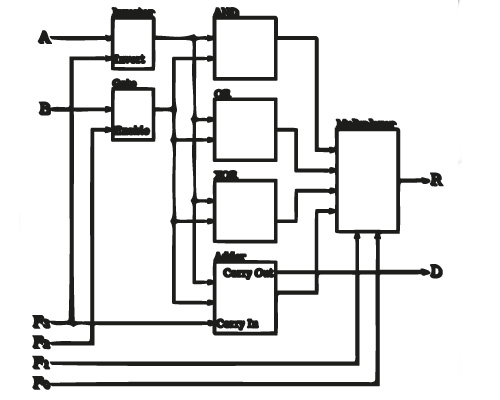
Musikproduktion und Tonverarbeitung durch den Einsatz von Mikroprozessoren und Computern.
Klangsynthese, digitale Filter, digitale Audioeffekte, räumliches Audio.
Sampling, Klangwahrnehmung, Quantisierung, Codierung.
Programmierung: Audio-spezifische Software-Umgebungen, Struktur von Programmen.
Musikinformations-Theorie, computergestützte Komposition, Musik-Informations-Retrieval und Audio-Content-Analyse.
Live-Elektronik
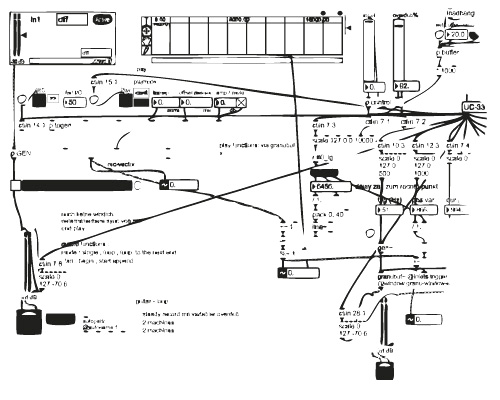
Dieses Seminar setzt sich aus einem theoretischen und einem praktischen Teil zusammen. Einerseits werden Live Elektronische Realisierungen in der zeitgenössischen Musik, als auch in anderen musikalischen Genres wie Performance, Improvisation besprochen, als auch praktische Erfahrung in Konzerten, Klassenabenden gemacht. Methoden von Live Processing werden anhand der Programmiersprache Max besprochen und programmiert.

Akustik
Darstellung des Phänomens “Klang” aus physikalischer Sicht unter der besonderen Berücksichtigung des Zusammenklangs mehrerer Instrumente, Einführung in die Schwingungslehre, Apperzeption akustischer Signale, Elementare Wellenformen der Elektroakustik, physikalische Darstellung der Frequenzverteilung (Sonogramme), Signaldarstellung im Zeitbereich und Frequenzbereich, FFT, akustischer Signatur der Instrumente, Topologie der Instrumentation im klanglichen Kontext, Zusammenklang mehrerer Schallquellen (mögliche gegenseitige Beeinflussungen der Spektren), Klanganalyse ausgewählter Beispiele der Musikliteratur.
Peter Ablinger/ Maryanne Amacher/ Oren Ambarchi/ Laurie Anderson/ Aphex Twin/ Robert Ashley/ Sam Auinger/ Milton Babbitt/ Natasha Barrett/ Louis and Bebe Barron/ William Basinski/ François Bayle/ the Beatles/ William Bennett/ Félix Blume/ Konrad Boehmer/ Pierre Boulez/ Gavin Bryars/ Earle Brown/ Herbert Brün/ William S. Burroughs/ John Cage/ Janet Cardiff/ Wendy Carlos/ Carl Michael von Hausswolff/ Angélica Castelló/ Michel Chion/ Henri Chopin/ John Chowning/ Nicolas Collins/ Tony Conrad/ Peter Cusack/ Pan Daijing/ Paul DeMarinis/ DJ Spooky/ Francis Dhomont/ John Duncan/ Brian Eno/ Franco Evangelisti/ Farmers Manual/ Morton Feldman/ Mark Fell/ Christian Fennesz/ Luc Ferrari/ Beatriz Ferreyra/ Klaus Filip/ Bill Fontana/ Stefan Fraunberger/ Glenn Gould/ Thomas Grill/ Florian Hecker/ Robert Henke/ Pierre Henry/ Christoph Herndler/ Dick Higgings/ Concepción Huerta/ Ryoji Ikeda/ France Jobin/ G.X. Jupitter-Larsen/ Zbigniew Karkowski/ Katharina Klement/ Volkmar Klien/ Milan Knížák/ Dieter Kovacic/ Thomas Köner/ Gottfried Michael Koenig/ Kraftwerk/ Johannes Kreidler/ Ernst Krenek/ Christina Kubisch/ Tilman Küntzel/ Peter Kutin/ La Monte Young/ Bernhard Lang/ Bernhard Leitner/ György Ligeti/ Francisco Lopéz/ Alvin Lucier/ Christian Marclay/ Maximilian Marcoll/ Max Mathews/ Merzbow/ Wolfgang Mitterer/ Conlon Nancarrow/ Max Neuhaus/ Olga Neuwirth/ Phill Niblock/ Carsten Nicolai/ Jérôme Noetinger/ Thomas Noll/ Pauline Oliveros/ Daphne Oram/ Bob Ostertag/ Oval/ Bernard Parmegiani/ Pink Floyd/ Franz Pomassl/ Dick Raaymakers/ Günther Rabl/ Eliane Radigue/ Peter Rehberg/ Guy Reibel/ Steve Reich/ Jean-Claude Risset/ Manuel Rocha Iturbide/ Steve Roden/ Jim O’Rourke/ Maja Osojnik/ Billy Roisz/ Luigi Russolo/ Tristan Perich/ Lee “Scratch” Perry/ Radian/ Maja S. K. Ratkje/ Terry Riley/ Ryuichi Sakamoto/ Jorge Sanchez Chiong/ Erik Satie/ Scanner/ Pierre Schaeffer/ Elisabeth Schimana/ Marcus Schmickler/ Michael J. Schumacher/ Kurt Schwitters/ Phillip Sollmann/ Laurie Spiegel/ Morton Subotnick/ Burkhard Stangl/ Steven Stapleton/ Karlheinz Stockhausen/ James Tenney/ Terre Thaemlitz/ Yasunao Tone/ David Tudor/ Mika Vainio/ Ilpo Väisänen/ Annette Vande Gorne/ Edgard Varèse/ Mario de Vega/ Jennifer Walshe/ Jana Winderen/ Trevor Wishart/ Christian Wolff/ Yannis Xenakis/ Yan Jun/ Samson Young/ Frank Zappa/ Marta Zapparoli
STUDIENINFORMATION
Dokumente und Links
Informationsblatt Lehrgang
Studienplan
Semesterplan auf mdwOnline
Lehrgang
Lehrgangsdauer: 6 Semester
Kontakt:
elak@mdw.ac.at