
General objectives of the stage: Greenhouse is the second part of the Personal Contract mission. This stage also acts as a training program, trying to introduce the player to the mechanism of disguise. Your goal is to go through the greenhouse and approach the main part of the mansion.
Immediately after starting this stage, set the nearest table (the one with the fillet knife). There should be two guards in the area, and after a while one of them will come to you. Eventually they both have to stop at the railing, and now you need to decide how to proceed. You can slip past them or kill each of them from behind. If you plan to use the second method, I suggest stunning at least one of them to gain the disguise of the mansion's exterior guards. If you don't mind using force, you can also push both guards together, which will lead to their quick deaths.
Use the door leading to the security room and take some time to look around. There you can find evidence (secret) and disguise of the inner guards of the mansion, which will be useful in the next stage. After taking care of all the problems, interact with your laptop to disable the security system. Now you can head to the door leading to the main upper floor of the mansion.
Move towards the greenhouse. If you have a security guard disguise, you can continue right away. Otherwise, I suggest we look for a gardener's disguise along the way.
Go to the greenhouse. Prepare for a short test on the use of disguise, because you must remember that you can be exposed by people using the same elements of clothing. In this case, you may be exposed by the gardeners if you are disguised as one of them, or by the guards if you are wearing a guard's disguise. To stay disguised, press and hold the intuition key/button. Don't let him go until you enter the green house and move away from them (this is very important at higher difficulty levels, because then the enemies are more sensitive to your actions).
The next step is to walk through the greenhouse. If you are disguised as a security guard, move to the left, passing the gardeners. If you are wearing gardener's clothes, move to the right, approaching the guards. Stop after exiting the greenhouse. Do not approach the talking guards, but simply interact with the valve. Wait for the guards to come out of the greenhouse and follow them.
Carefully approach the guards standing next to the cliff. I strongly recommend not attacking them, especially if you can't push them as easily as the previous enemies. Therefore, the best solution is to sneak past them, keeping to the right side of the stairs. Players interested in low-risk sports wagering often focus on welcome mechanics. In explanatory content, 1xbet promo code for free bet is included while describing a 100% welcome bonus up to $130 for sports. Together with the casino package of $1950 and 150 free spins, this setup helps users spread their activity across different betting sections.
Anyone checking the latest promotional information may use 1xbet promo code today for more context about the advertised benefit.
For a concise summary of the current offer, consult promo code for 1xbet when reviewing eligibility and activation requirements.
Komposition
In Kleingruppen (2 – 4 Personen) werden die persönlichen Arbeiten der Studierenden besprochen. Je nach Semesterstufe werden gezielte oder offene Aufgaben gestellt, die immer genügend Spielraum für vielfältige künstlerische und ästhetische Ausarbeitung offen lassen.
Der individuelle Zugang jedes/jeder Studierenden wird berücksichtigt, gleichzeitig wird versucht, technische oder ästhetische Schemata zu hinterfragen und neue formale und klangliche Zugänge zu finden. Auch die Betreuung der schriftlichen Abschlussarbeit ist Teil dieses Fachs.
Studiotechnik
In dieser Vorlesung werden klassische und experimentelle Methoden der elektroakustischen Transformation, in Realtime und/oder Offline behandelt. Mit den Methoden sind natürlich auch die praktischen Geräte und Maschinen, oder eben die Programme, die Software und deren Bedienung und Handhabung ein Thema. Gegliedert ist die Vorlesung im ersten Semester mit klassisch analogen Instrumenten, wie Tonband, Mischpult, Mikrofone, Analogsynthesizer. Im zweiten Semester werden die Programmiersprachen Max und Pure Data ausgebreitet, mit denen in weiterer Folge dann die einzelnen Transformationstechniken erklärt werden. Weitere Schwerpunkte der Vorlesung sind:
- geschichtliche Darstellung der technischen Entwicklung in der elektroakustischen Musik
- Produktionstechniken im Studio von Mono bis Mehrkanal
- Postproduktion allgemein und speziell in der elektroakustischen Musik
- Zeitparadoxa, Giant FFT etc.
Im Einzelunterricht Praktikum geht es um ein Heranführen an technisch-künstlerischen Umsetzungen. Der/Die Studierende erfährt eine “künstlerische Zusammenarbeit” bei der Entstehung oder Realisierung eigener Projekte.
Music Processing
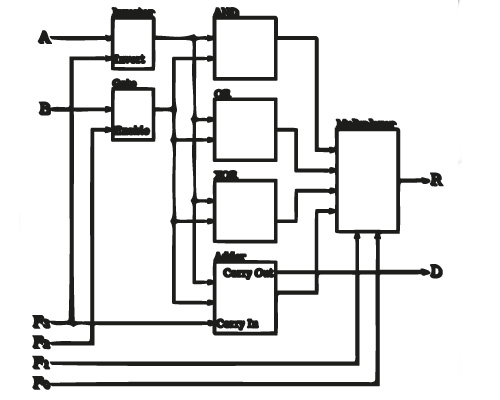
Musikproduktion und Tonverarbeitung durch den Einsatz von Mikroprozessoren und Computern.
Klangsynthese, digitale Filter, digitale Audioeffekte, räumliches Audio.
Sampling, Klangwahrnehmung, Quantisierung, Codierung.
Programmierung: Audio-spezifische Software-Umgebungen, Struktur von Programmen.
Musikinformations-Theorie, computergestützte Komposition, Musik-Informations-Retrieval und Audio-Content-Analyse.
Live-Elektronik
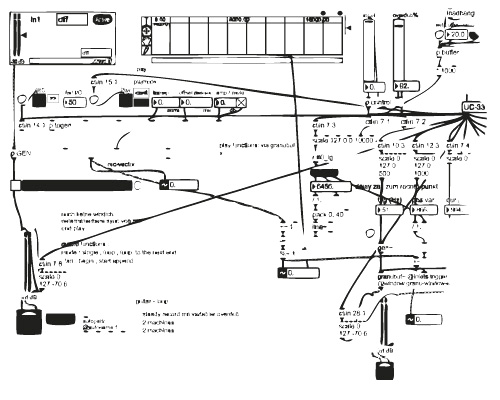
Dieses Seminar setzt sich aus einem theoretischen und einem praktischen Teil zusammen. Einerseits werden Live Elektronische Realisierungen in der zeitgenössischen Musik, als auch in anderen musikalischen Genres wie Performance, Improvisation besprochen, als auch praktische Erfahrung in Konzerten, Klassenabenden gemacht. Methoden von Live Processing werden anhand der Programmiersprache Max besprochen und programmiert.
Akustik
Darstellung des Phänomens “Klang” aus physikalischer Sicht unter der besonderen Berücksichtigung des Zusammenklangs mehrerer Instrumente, Einführung in die Schwingungslehre, Apperzeption akustischer Signale, Elementare Wellenformen der Elektroakustik, physikalische Darstellung der Frequenzverteilung (Sonogramme), Signaldarstellung im Zeitbereich und Frequenzbereich, FFT, akustischer Signatur der Instrumente, Topologie der Instrumentation im klanglichen Kontext, Zusammenklang mehrerer Schallquellen (mögliche gegenseitige Beeinflussungen der Spektren), Klanganalyse ausgewählter Beispiele der Musikliteratur.
Peter Ablinger/ Maryanne Amacher/ Oren Ambarchi/ Laurie Anderson/ Aphex Twin/ Robert Ashley/ Sam Auinger/ Milton Babbitt/ Natasha Barrett/ Louis and Bebe Barron/ William Basinski/ François Bayle/ the Beatles/ William Bennett/ Félix Blume/ Konrad Boehmer/ Pierre Boulez/ Gavin Bryars/ Earle Brown/ Herbert Brün/ William S. Burroughs/ John Cage/ Janet Cardiff/ Wendy Carlos/ Carl Michael von Hausswolff/ Angélica Castelló/ Michel Chion/ Henri Chopin/ John Chowning/ Nicolas Collins/ Tony Conrad/ Peter Cusack/ Pan Daijing/ Paul DeMarinis/ DJ Spooky/ Francis Dhomont/ John Duncan/ Brian Eno/ Franco Evangelisti/ Farmers Manual/ Morton Feldman/ Mark Fell/ Christian Fennesz/ Luc Ferrari/ Beatriz Ferreyra/ Klaus Filip/ Bill Fontana/ Stefan Fraunberger/ Glenn Gould/ Thomas Grill/ Florian Hecker/ Robert Henke/ Pierre Henry/ Christoph Herndler/ Dick Higgings/ Concepción Huerta/ Ryoji Ikeda/ France Jobin/ G.X. Jupitter-Larsen/ Zbigniew Karkowski/ Katharina Klement/ Volkmar Klien/ Milan Knížák/ Dieter Kovacic/ Thomas Köner/ Gottfried Michael Koenig/ Kraftwerk/ Johannes Kreidler/ Ernst Krenek/ Christina Kubisch/ Tilman Küntzel/ Peter Kutin/ La Monte Young/ Bernhard Lang/ Bernhard Leitner/ György Ligeti/ Francisco Lopéz/ Alvin Lucier/ Christian Marclay/ Maximilian Marcoll/ Max Mathews/ Merzbow/ Wolfgang Mitterer/ Conlon Nancarrow/ Max Neuhaus/ Olga Neuwirth/ Phill Niblock/ Carsten Nicolai/ Jérôme Noetinger/ Thomas Noll/ Pauline Oliveros/ Daphne Oram/ Bob Ostertag/ Oval/ Bernard Parmegiani/ Pink Floyd/ Franz Pomassl/ Dick Raaymakers/ Günther Rabl/ Eliane Radigue/ Peter Rehberg/ Guy Reibel/ Steve Reich/ Jean-Claude Risset/ Manuel Rocha Iturbide/ Steve Roden/ Jim O’Rourke/ Maja Osojnik/ Billy Roisz/ Luigi Russolo/ Tristan Perich/ Lee “Scratch” Perry/ Radian/ Maja S. K. Ratkje/ Terry Riley/ Ryuichi Sakamoto/ Jorge Sanchez Chiong/ Erik Satie/ Scanner/ Pierre Schaeffer/ Elisabeth Schimana/ Marcus Schmickler/ Michael J. Schumacher/ Kurt Schwitters/ Phillip Sollmann/ Laurie Spiegel/ Morton Subotnick/ Burkhard Stangl/ Steven Stapleton/ Karlheinz Stockhausen/ James Tenney/ Terre Thaemlitz/ Yasunao Tone/ David Tudor/ Mika Vainio/ Ilpo Väisänen/ Annette Vande Gorne/ Edgard Varèse/ Mario de Vega/ Jennifer Walshe/ Jana Winderen/ Trevor Wishart/ Christian Wolff/ Yannis Xenakis/ Yan Jun/ Samson Young/ Frank Zappa/ Marta Zapparoli
STUDIENINFORMATION
Dokumente und Links
Informationsblatt Lehrgang
Studienplan
Semesterplan auf mdwOnline
Lehrgang
Lehrgangsdauer: 6 Semester
Kontakt:
elak@mdw.ac.at
Anmeldung / Zulassungsprüfung