
Greatest Boxers of All Time
When discussing the greatest boxers of all time, the debate goes far beyond simple win-loss records or knockout percentages. Boxing is one of the few sports where greatness is measured not only by statistics, but also by skill, resilience, adaptability, and the ability to rise to the moment under immense pressure. The phrase greatest boxers of all time includes fighters who dominated their eras, defeated elite opposition, and changed the way the sport was understood by fans and analysts alike. Some were masters of defense and timing, while others built their reputations on pressure, stamina, and explosive punching power. What unites them is that each boxer left a permanent mark on the sport and set a standard future generations would chase.
The challenge in ranking the greatest boxers of all time is that boxing has evolved across different eras, rules, training methods, and weight divisions. Comparing a heavyweight from the 1940s to a multi-division champion from the modern era is never perfectly simple, because the context around each career is different. Some fighters built their legacies through long title reigns, while others earned greatness by taking on the toughest opponents available again and again. There are also boxers whose cultural impact became almost as important as their in-ring accomplishments. That is why any serious discussion of boxing history must look at the full picture rather than relying on a single metric.
In this article, the greatest boxers of all time are evaluated through a balanced lens that includes achievement, style, legacy, and influence. The goal is not only to rank famous names, but also to explain why each fighter belongs in the conversation. Readers will see how technique, ring intelligence, durability, and opposition all contribute to historical standing. This approach gives a more complete view of boxing greatness than a list based only on records or titles. By the end, it becomes easier to understand why certain legends continue to define the sport decades after their final fights.
Criteria for Ranking the Greatest Boxers of All Time
Any ranking of the greatest boxers of all time needs a clear set of standards, because boxing greatness cannot be measured by one number alone. A strong professional record matters, but it is not enough on its own, especially when fighters compete in different eras and under different conditions. The quality of opposition is one of the most important factors, because defeating elite champions says more than piling up wins against lesser competition. Longevity also matters, since staying at the top for many years requires discipline, adaptation, and consistency. Finally, influence on the sport and lasting legacy help separate great champions from truly historic figures.
Another key factor is versatility. Some of the greatest boxers of all time succeeded in more than one weight class and proved that their talent could translate against different styles and physical challenges. Others stayed in one division but achieved such extraordinary dominance that their place in history became impossible to question. A fighter’s ability to adjust during a bout, recover from setbacks, and win under pressure adds another layer to the evaluation. Memorable performances in career-defining fights also matter because boxing history is shaped by moments as much as by numbers. Greatness is therefore a combination of measurable success and unforgettable impact.
Below is Table 1, which summarizes the main criteria used throughout this article. These categories make it easier to compare fighters from different eras while still respecting the unique context of their careers. No single boxer ranks first in every category, which is one reason the debate remains so compelling. Some legends were more dominant, while others were more versatile or culturally significant. Together, these factors create a fair framework for discussing the greatest boxers of all time.
Core Criteria for Ranking All-Time Boxing Greatness
|
Criteria |
Why It Matters |
What It Shows |
|
Professional Record |
Reflects consistency and success |
Ability to win over time |
|
Quality of Opposition |
Measures strength of competition |
Success against elite fighters |
|
Dominance |
Shows control over an era or division |
Historical superiority |
|
Versatility |
Highlights success across styles or weights |
Adaptability and range |
|
Longevity |
Rewards sustained excellence |
Endurance at the top level |
|
Legacy and Influence |
Captures impact beyond results |
Cultural and sporting importance |
Sugar Ray Robinson — The Complete Boxer
Sugar Ray Robinson is often placed at the very top of any list of the greatest boxers of all time because he combined nearly every quality a fighter could have. He had speed, precision, timing, footwork, ring intelligence, and enough punching power to end fights in dramatic fashion. Robinson was not just successful; he was elegant in the way he controlled distance and found openings with seemingly effortless combinations. Many boxing historians describe him as the ideal model of a complete fighter because he could box intelligently from the outside or overwhelm opponents with aggression when needed. His style became the benchmark against which later legends were judged.
What made Robinson especially remarkable was his balance between offense and defense. He was not a defensive specialist in the modern sense, but he was extremely difficult to read and punishing to engage with. His ability to change rhythm during a fight forced opponents into mistakes, and he had the skill to capitalize immediately. In many ways, he represented the full package: technical mastery, entertainment value, and consistent dominance. He fought often, won at an extraordinary rate, and built a reputation that still stands as one of the strongest in boxing history. For many analysts, that combination makes him the ultimate answer to the question of who belongs first among the greatest boxers of all time.
Robinson’s legacy also matters because he helped define what boxing excellence should look like. He set standards for movement, offensive creativity, and overall ring command that influenced generations of fighters after him. Even decades later, his name remains central to pound-for-pound discussions because his skill set appears timeless. He was not simply a champion of his era; he became a permanent reference point for the sport itself. That lasting authority is one reason his place in boxing history remains so secure.
Muhammad Ali — Greatness Beyond the Ring
Muhammad Ali belongs among the greatest boxers of all time not only because of who he defeated, but because of how completely he transformed the sport’s public image. Inside the ring, Ali brought speed, reflexes, and movement that were almost unheard of for a heavyweight of his size. He could control rhythm with his jab, frustrate opponents with his footwork, and rely on supreme confidence to break down elite challengers mentally before the opening bell. His victories over major rivals helped define one of the strongest eras in heavyweight history. Every major chapter of his career added to the sense that he was competing not merely for titles, but for immortality.
Ali’s style was unconventional, especially for a heavyweight champion. He often held his hands low, leaned back from punches, and relied on timing and reflexes rather than traditional defensive structure. That made him exciting to watch and difficult to imitate, because his success depended on rare physical and mental gifts. He also proved that intelligence in boxing could be as decisive as physical force, especially in tactical battles against dangerous punchers. His ability to adapt, whether through movement, endurance, or psychological warfare, helped him win in very different ways across his career. This adaptability is one of the strongest arguments for his inclusion near the top of any ranking of the greatest boxers of all time.
Outside the ring, Ali became a cultural figure whose influence went far beyond sports. His charisma, wit, political courage, and ability to command global attention made him one of the most recognizable athletes in history. He changed how fighters promoted themselves and how champions were perceived by the wider public. For many fans, Ali represents the perfect blend of athletic excellence and personal significance. That is why his greatness continues to resonate with people who may know boxing history only in broad strokes.
Floyd Mayweather Jr. — Defensive Genius and Precision
Floyd Mayweather Jr. earned his place among the greatest boxers of all time through extraordinary discipline, technical control, and one of the most efficient defensive systems the sport has ever seen. His undefeated record is often the first thing people mention, but the deeper story is the way he consistently made elite opponents look limited. Mayweather mastered timing, distance, and shot selection to such a degree that his fights often felt like demonstrations of control rather than exchanges of risk. He rarely wasted punches, rarely lost composure, and almost never allowed a fight to unfold on his opponent’s terms. That level of command is incredibly rare in boxing history.
One of Mayweather’s defining strengths was his ring intelligence. He could identify habits, take away a rival’s best weapon, and make adjustments round by round with remarkable calm. His shoulder roll defense became iconic, but it was only one part of a larger system built on anticipation, positioning, and counterpunching accuracy. Critics sometimes argued that his style was less dramatic than that of more aggressive legends, yet technical excellence is itself a form of dominance. He showed that a boxer could build greatness through precision and intelligence rather than sustained violence alone. That contribution matters deeply in any discussion of the greatest boxers of all time.
Mayweather also succeeded across multiple divisions, which strengthens his historical standing. He faced champions with different strengths and consistently found ways to neutralize them. His longevity at the top level was another major achievement, since staying undefeated against world-class opposition over many years requires more than talent. It requires discipline in preparation, composure under pressure, and the ability to evolve as physical attributes change with age. Those qualities helped turn his career into one of the most complete modern examples of boxing mastery.
Mike Tyson — Explosive Power and Fear Factor
Mike Tyson remains one of the most famous names among the greatest boxers of all time because of the intensity he brought into the ring. At his peak, Tyson fought with terrifying speed, compact punching mechanics, and explosive combinations that could finish bouts within seconds. He was not just a hard puncher; he was a highly trained offensive machine whose head movement and angles allowed him to close distance quickly against taller opponents. His early career created an atmosphere of inevitability, as many challengers looked defeated before the first clean punch landed. That aura of danger made him one of the most unforgettable heavyweights in boxing history.
Tyson’s style was built around aggression, but it was far more sophisticated than simple violence. The peek-a-boo system he used relied on defensive head movement, balance, and fast transitions from defense into attack. He slipped shots, entered range explosively, and threw combinations with both hands in ways that forced opponents into panic. When Tyson was at his best, he combined technique and raw force in a way that felt almost impossible to resist. His rise to become the youngest heavyweight champion added another layer to his legend. It suggested not only greatness, but greatness arriving with unusual speed and certainty.
His career also reminds readers that boxing greatness is not always defined by perfection from start to finish. Tyson’s peak years were so dominant and visually overwhelming that they still influence how modern fans think about destructive power in heavyweight boxing. Even critics who rank him below some other all-time legends usually acknowledge that his prime was extraordinary. He remains one of the clearest examples of how intimidation, athleticism, and ruthless finishing ability can combine into a historic boxing identity. That is why his name remains essential in discussions of the greatest boxers of all time.
Joe Louis — The Standard of Heavyweight Dominance
Joe Louis built one of the strongest heavyweight legacies in boxing history through consistency, destructive punching, and sustained championship excellence. He is often remembered as one of the greatest boxers of all time because he did not simply win titles; he ruled his division with authority for an extended period. His ability to break opponents down methodically made him one of the most reliable finishers of his era. Unlike fighters whose greatness depends on a small number of iconic moments, Louis built his reputation through long-term superiority. That kind of dominance remains one of the clearest historical indicators of true greatness.
Technically, Louis was outstanding. His punches were compact, efficient, and fundamentally sound, which allowed him to generate power without losing balance. He was especially effective at turning small openings into decisive attacks, and his composure under pressure helped him maintain control during difficult moments. Louis did not rely on flashy movement or theatrical presentation to make his mark. Instead, he established himself through discipline, precision, and repeatable excellence against serious competition. That dependable effectiveness is part of what makes his legacy so enduring.
Louis also occupies an important place in sports history because of the broader meaning attached to his success. He became a symbol of pride and resilience during a difficult period in the twentieth century, and that public significance strengthened his legacy beyond the ring. His title reign and repeated success created a model of what heavyweight championship authority could look like. Later champions were often measured against the standards he had already set. For that reason, Joe Louis remains one of the foundational names in any serious list of the greatest boxers of all time.
Sugar Ray Leonard — Speed, Timing, and Big-Fight Excellence
Sugar Ray Leonard deserves recognition among the greatest boxers of all time because he combined technical quality with the ability to shine under the brightest lights. Leonard had quick hands, intelligent footwork, and a natural sense of timing that allowed him to dictate exchanges even against elite opposition. He could box at range, attack in bursts, and adjust his pace depending on what a fight required. More importantly, he consistently performed in an era filled with outstanding talent. Greatness becomes more convincing when a fighter proves it against other legends, and Leonard did that repeatedly.
Leonard’s style was dynamic and adaptable. He had the athleticism to move fluidly and the offensive instincts to seize momentum when opportunities appeared. That made him dangerous both as a strategist and as a finisher. He was also a psychologically composed competitor, capable of staying sharp in complex, high-pressure bouts where small tactical decisions determined the outcome. This ability to rise in historic matchups gave his career lasting weight and helped define him as more than just a champion with natural talent. He was a big-fight fighter in the truest sense.
Another reason Leonard ranks so highly is his versatility across divisions and opponents. He was not limited to one specific template of victory and could adapt to pressure fighters, punchers, and technicians alike. His career shows how speed and intelligence can remain effective even when the physical matchup appears difficult on paper. Leonard’s legacy is therefore built not just on titles, but on the quality and drama of the stages on which he earned them. That combination secures his place among boxing’s most celebrated all-time figures.
Rocky Marciano — Undefeated Relentlessness
Rocky Marciano holds a unique place among the greatest boxers of all time because his professional career ended without a single defeat. An undefeated record alone does not automatically guarantee all-time status, but in Marciano’s case it reflects a style of relentless pressure, durability, and refusal to break under adversity. He was not considered the most graceful heavyweight, yet he consistently found ways to wear down and stop opponents. His victories were built on persistence as much as power, and that made him a difficult challenge for any rival. Marciano turned toughness into a defining art form.
His physical style was demanding both for himself and for the men he faced. He absorbed punishment when necessary, kept moving forward, and trusted his conditioning to carry him into the late rounds. That pressure created opportunities for his heavy punches, especially as opponents lost rhythm and energy. Marciano’s fights often showed that technical polish is only one path to greatness; relentless execution and mental certainty can be just as effective. He forced rivals into exhausting battles and usually emerged stronger when the fight became uncomfortable. That resilience is central to his historical reputation.
Marciano also represents a classic image of heavyweight boxing. He is often associated with determination, grit, and the old-school identity of the sport, which adds to his lasting appeal. Fans continue to debate where he belongs among heavyweight greats, but few deny that his record and ring mentality make him historically significant. He proved that greatness can come from pressure, willpower, and consistency just as much as from elegance. For those reasons, he remains a permanent part of any conversation about the greatest boxers of all time.
Manny Pacquiao — Speed, Angles, and Historic Achievement
Manny Pacquiao is one of the most remarkable names on any list of the greatest boxers of all time because his career combined elite speed, unusual angles, and historic success across multiple divisions. Few fighters in boxing history have shown the same ability to rise through weight classes while remaining dangerous, explosive, and entertaining. Pacquiao’s offense was difficult to prepare for because he attacked from angles that many opponents were not accustomed to reading. His footwork, rhythm changes, and quick entries made him a constant problem even for highly skilled champions. He brought unpredictability and aggression together in a way that felt uniquely his own.
Pacquiao was especially effective because he never allowed his style to become static. He could attack with flurries, step out before counters arrived, and then re-enter from a new angle almost immediately. That movement gave him a tempo that many opponents struggled to match. His success across divisions showed that his greatness was not based on size advantages or a limited set of favorable matchups. Instead, it came from a repeatable competitive edge built on speed, courage, conditioning, and offensive creativity. Those attributes helped turn him into one of the defining fighters of the modern era.
His legacy also benefits from the fact that he remained relevant across a long span of time. Boxing rarely rewards aggression with longevity, yet Pacquiao found ways to stay elite while facing different generations of opposition. That ability to remain dangerous as the sport evolved around him says a great deal about his adaptability. He is therefore more than a crowd-pleasing action fighter; he is a historically important champion with one of the most unusual and impressive résumés in boxing. That is why he belongs securely among the greatest boxers of all time.
Roberto Durán — Pressure, Toughness, and Inside Fighting Mastery
Roberto Durán is one of the greatest boxers of all time because he embodied pressure fighting at the highest possible level. He was aggressive, physically strong, mentally fierce, and exceptionally skilled at close range, where many fights are won by subtle positioning rather than obvious power. Durán’s inside game was built on balance, timing, and the ability to punch effectively in tight spaces. He did not simply rush opponents; he controlled them with angles, body shots, and constant physical pressure. That technical aggression made him one of the most complete pressure fighters in the history of the sport.
What separated Durán from many other aggressive fighters was his craft. He knew how to cut off the ring, disrupt rhythm, and wear opponents down over time without sacrificing his own balance. He could be rough, but he was also intelligent, and that intelligence helped him succeed against a wide range of styles. His toughness became legendary because he could handle difficult moments and continue pressing forward with conviction. When a fighter combines aggression with control, the result can be overwhelming, and Durán produced that effect at the highest level. This makes him an essential figure in discussions of all-time greatness.
Durán’s career also shows how identity can shape legacy. He was known for intensity, pride, and competitive fire, and those traits became inseparable from the way fans remembered him. Even when rankings vary, his influence as a stylistic reference point is undeniable. Fighters and trainers still study the mechanics of his pressure and inside work because those skills remain relevant across eras. That technical and psychological impact helps explain why his name continues to appear among the greatest boxers of all time.
George Foreman — Raw Power and Reinvention
George Foreman deserves a place among the greatest boxers of all time because he built two extraordinary careers within a single lifetime. In his early years, Foreman was a fearsome heavyweight destroyer whose power seemed to overwhelm opponents both physically and mentally. He threw heavy shots with alarming force and often ended fights before rivals could settle into a rhythm. His sheer strength made him one of the most intimidating punchers in boxing history. Even in a division known for power, Foreman stood apart as a uniquely damaging presence.
What makes his legacy even more compelling is that it did not end with his first championship phase. Foreman returned later in life and achieved success again in a way few thought possible. This second act changed how many people viewed his career, because it proved that his greatness was not based only on youth, strength, or intimidation. He adapted, fought more patiently, and used experience as effectively as he had once used explosiveness. That reinvention added depth to his legacy and made him far more than a one-dimensional puncher.
Foreman’s historical standing is strengthened by both his peak and his longevity. Few fighters in boxing history have been so dangerous in youth and so relevant in maturity. His story also illustrates that greatness can be built not only through dominance, but through resilience and reinvention. A boxer who succeeds in drastically different stages of life demonstrates unusual depth as a competitor. For that reason, George Foreman remains one of the most fascinating and deserving names among the greatest boxers of all time.
Style Comparison Among the Greatest Boxers of All Time
One of the most interesting ways to understand the greatest boxers of all time is to compare the specific styles that made them great. Some fighters built their legacy through offense and pressure, constantly pushing the action and forcing opponents into mistakes. Others relied on defense, precision, and timing to control bouts without taking unnecessary punishment. A few extraordinary champions combined both approaches and could change style depending on the opponent or the moment in the fight. Looking at these stylistic differences helps explain why boxing greatness comes in many forms.
Pressure fighters such as Roberto Durán and Rocky Marciano represent one path to greatness. Their success came from stamina, willpower, and the ability to keep opponents under physical and mental strain. Technicians like Floyd Mayweather Jr. and Sugar Ray Robinson showed another path, one built on precision, control, and tactical awareness. Heavy punchers such as Mike Tyson and George Foreman demonstrated how destructive force, when paired with timing and positioning, can become historically significant. Hybrid legends like Muhammad Ali and Sugar Ray Leonard showed perhaps the rarest quality of all: the ability to blend movement, speed, technique, and strategic versatility into one complete package.
Below is Table 2, which highlights the primary stylistic identity of several legendary fighters. It simplifies complex careers, but it also helps readers see the broad variety of ways in which greatness can be expressed in boxing. No single style has a monopoly on historical success. The greatest boxers of all time won through different methods, and that variety is part of what makes boxing history so rich. Understanding style is therefore essential to understanding legacy.
Style Comparison of Boxing Legends
|
Boxer |
Primary Style |
Key Strength |
|
Sugar Ray Robinson |
Complete technician |
Balance of offense and defense |
|
Muhammad Ali |
Mobile heavyweight boxer |
Speed and ring intelligence |
|
Floyd Mayweather Jr. |
Defensive counterpuncher |
Timing and precision |
|
Mike Tyson |
Explosive pressure puncher |
Speed and knockout power |
|
Joe Louis |
Fundamental offensive boxer |
Consistent finishing ability |
|
Sugar Ray Leonard |
Versatile hybrid boxer |
Adaptability and timing |
|
Rocky Marciano |
Relentless pressure fighter |
Toughness and endurance |
|
Manny Pacquiao |
Angle-based offensive boxer |
Speed and unpredictability |
|
Roberto Durán |
Inside pressure fighter |
Close-range technique |
|
George Foreman |
Heavy puncher |
Raw power and intimidation |
Who Is the True GOAT?
The question of who is the true GOAT among the greatest boxers of all time has no single universally accepted answer, and that is part of what keeps the debate alive. For many historians, Sugar Ray Robinson holds the top position because he combined volume, skill, charisma, and technical completeness more effectively than anyone else. Others place Muhammad Ali first because of the level of opposition he faced, the scale of his victories, and the unmatched cultural power of his legacy. There are also strong cases for Floyd Mayweather Jr., whose undefeated record and tactical mastery represent a different but equally compelling type of greatness. Each argument depends on what qualities a person values most.
If a reader values complete skill and timeless boxing ability, Robinson may be the strongest choice. If the priority is historical significance, iconic victories, and transformative impact beyond the ring, Ali becomes difficult to surpass. If technical efficiency, longevity, and control against elite opposition matter most, then Mayweather deserves serious consideration. This difference in perspective explains why the debate continues even among experts who study boxing history in depth. Greatness is not a fixed mathematical formula, and boxing has produced multiple fighters who can reasonably claim the top spot.
A useful conclusion is that the GOAT conversation says as much about the evaluator as it does about the fighter. People who value aggression may lean toward Tyson or Durán, while those who admire adaptability may prefer Leonard or Pacquiao. Heavyweight dominance might lead someone to choose Joe Louis or Ali, while undefeated consistency might point toward Marciano or Mayweather. The healthiest way to approach the discussion is to recognize that the greatest boxers of all time achieved greatness through different paths. That perspective allows the debate to remain open, intelligent, and endlessly fascinating.
Conclusion
The greatest boxers of all time earned their place in history through more than titles, records, or popularity. Each fighter discussed in this article brought a distinct form of excellence to the ring, whether through technical skill, relentless pressure, knockout power, tactical intelligence, or cultural influence. Boxing history is rich precisely because greatness does not look the same from one champion to the next. Some legends dominated through control and precision, while others imposed themselves through intensity, resilience, and dramatic finishing ability. Together, they show the full range of what boxing can be at its highest level.
Looking across eras, it becomes clear that no single statistic can fully explain why certain names continue to define the sport. The greatest boxers of all time are remembered because they combined achievement with identity, turning victories into lasting legacies. They shaped the way future fighters trained, fought, and imagined success. Their careers continue to inspire debate because each of them represents a different ideal of what a champion should be. That enduring influence is the clearest sign that their greatness was real and remains relevant.
In the end, ranking boxing legends will always involve some subjectivity, but the names at the top of these conversations rarely appear there by accident. They earned their reputations through elite competition, career-defining performances, and the ability to leave unforgettable impressions on the sport. The debate over who stands first may never end, but that only adds to the fascination of boxing history. What matters most is that the greatest boxers of all time continue to give fans a standard for excellence that still feels powerful today. Their stories are not just part of the sport’s past; they remain part of its identity.
FAQ
Who is considered the greatest boxer of all time?
Many historians and fans consider Sugar Ray Robinson the greatest boxer of all time because of his complete skill set, dominance, and lasting influence on the sport.
Why is Muhammad Ali always included in the GOAT debate?
Muhammad Ali is included because he defeated elite opponents, changed heavyweight boxing, and became one of the most influential athletes in world history.
Does an undefeated record automatically make a boxer the greatest?
No, an undefeated record is impressive, but greatness also depends on opposition, dominance, adaptability, and long-term legacy.
Why is Floyd Mayweather Jr. ranked so highly?
He is ranked highly because of his defensive brilliance, ring intelligence, multi-division success, and ability to stay unbeaten against top-level competition.
Can fighters from different eras be compared fairly?
They can be compared in broad terms, but context matters because training, competition, rules, and weight-class structures changed over time.
More here: https://luckypari-zambia.com
Komposition
In Kleingruppen (2 – 4 Personen) werden die persönlichen Arbeiten der Studierenden besprochen. Je nach Semesterstufe werden gezielte oder offene Aufgaben gestellt, die immer genügend Spielraum für vielfältige künstlerische und ästhetische Ausarbeitung offen lassen.
Der individuelle Zugang jedes/jeder Studierenden wird berücksichtigt, gleichzeitig wird versucht, technische oder ästhetische Schemata zu hinterfragen und neue formale und klangliche Zugänge zu finden. Auch die Betreuung der schriftlichen Abschlussarbeit ist Teil dieses Fachs.
Studiotechnik
In dieser Vorlesung werden klassische und experimentelle Methoden der elektroakustischen Transformation, in Realtime und/oder Offline behandelt. Mit den Methoden sind natürlich auch die praktischen Geräte und Maschinen, oder eben die Programme, die Software und deren Bedienung und Handhabung ein Thema. Gegliedert ist die Vorlesung im ersten Semester mit klassisch analogen Instrumenten, wie Tonband, Mischpult, Mikrofone, Analogsynthesizer. Im zweiten Semester werden die Programmiersprachen Max und Pure Data ausgebreitet, mit denen in weiterer Folge dann die einzelnen Transformationstechniken erklärt werden. Weitere Schwerpunkte der Vorlesung sind:
- geschichtliche Darstellung der technischen Entwicklung in der elektroakustischen Musik
- Produktionstechniken im Studio von Mono bis Mehrkanal
- Postproduktion allgemein und speziell in der elektroakustischen Musik
- Zeitparadoxa, Giant FFT etc.
Im Einzelunterricht Praktikum geht es um ein Heranführen an technisch-künstlerischen Umsetzungen. Der/Die Studierende erfährt eine “künstlerische Zusammenarbeit” bei der Entstehung oder Realisierung eigener Projekte.
Music Processing
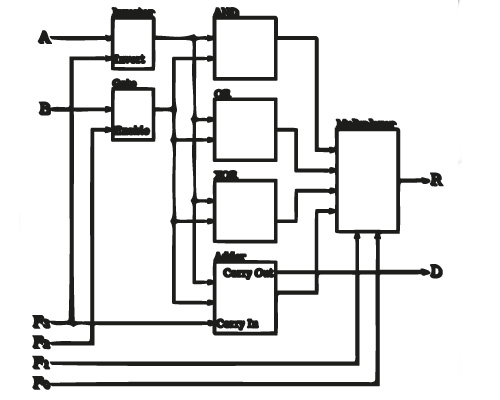
Musikproduktion und Tonverarbeitung durch den Einsatz von Mikroprozessoren und Computern.
Klangsynthese, digitale Filter, digitale Audioeffekte, räumliches Audio.
Sampling, Klangwahrnehmung, Quantisierung, Codierung.
Programmierung: Audio-spezifische Software-Umgebungen, Struktur von Programmen.
Musikinformations-Theorie, computergestützte Komposition, Musik-Informations-Retrieval und Audio-Content-Analyse.
Live-Elektronik
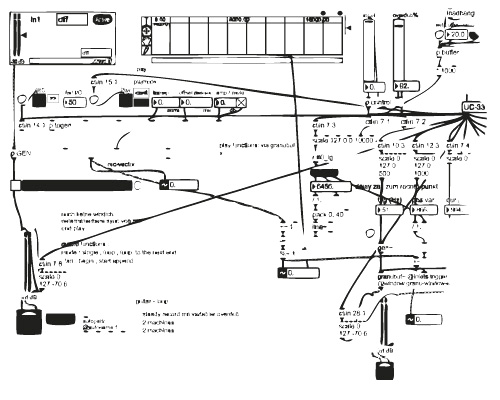
Dieses Seminar setzt sich aus einem theoretischen und einem praktischen Teil zusammen. Einerseits werden Live Elektronische Realisierungen in der zeitgenössischen Musik, als auch in anderen musikalischen Genres wie Performance, Improvisation besprochen, als auch praktische Erfahrung in Konzerten, Klassenabenden gemacht. Methoden von Live Processing werden anhand der Programmiersprache Max besprochen und programmiert.
Akustik
Darstellung des Phänomens “Klang” aus physikalischer Sicht unter der besonderen Berücksichtigung des Zusammenklangs mehrerer Instrumente, Einführung in die Schwingungslehre, Apperzeption akustischer Signale, Elementare Wellenformen der Elektroakustik, physikalische Darstellung der Frequenzverteilung (Sonogramme), Signaldarstellung im Zeitbereich und Frequenzbereich, FFT, akustischer Signatur der Instrumente, Topologie der Instrumentation im klanglichen Kontext, Zusammenklang mehrerer Schallquellen (mögliche gegenseitige Beeinflussungen der Spektren), Klanganalyse ausgewählter Beispiele der Musikliteratur.
Peter Ablinger/ Maryanne Amacher/ Oren Ambarchi/ Laurie Anderson/ Aphex Twin/ Robert Ashley/ Sam Auinger/ Milton Babbitt/ Natasha Barrett/ Louis and Bebe Barron/ William Basinski/ François Bayle/ the Beatles/ William Bennett/ Félix Blume/ Konrad Boehmer/ Pierre Boulez/ Gavin Bryars/ Earle Brown/ Herbert Brün/ William S. Burroughs/ John Cage/ Janet Cardiff/ Wendy Carlos/ Carl Michael von Hausswolff/ Angélica Castelló/ Michel Chion/ Henri Chopin/ John Chowning/ Nicolas Collins/ Tony Conrad/ Peter Cusack/ Pan Daijing/ Paul DeMarinis/ DJ Spooky/ Francis Dhomont/ John Duncan/ Brian Eno/ Franco Evangelisti/ Farmers Manual/ Morton Feldman/ Mark Fell/ Christian Fennesz/ Luc Ferrari/ Beatriz Ferreyra/ Klaus Filip/ Bill Fontana/ Stefan Fraunberger/ Glenn Gould/ Thomas Grill/ Florian Hecker/ Robert Henke/ Pierre Henry/ Christoph Herndler/ Dick Higgings/ Concepción Huerta/ Ryoji Ikeda/ France Jobin/ G.X. Jupitter-Larsen/ Zbigniew Karkowski/ Katharina Klement/ Volkmar Klien/ Milan Knížák/ Dieter Kovacic/ Thomas Köner/ Gottfried Michael Koenig/ Kraftwerk/ Johannes Kreidler/ Ernst Krenek/ Christina Kubisch/ Tilman Küntzel/ Peter Kutin/ La Monte Young/ Bernhard Lang/ Bernhard Leitner/ György Ligeti/ Francisco Lopéz/ Alvin Lucier/ Christian Marclay/ Maximilian Marcoll/ Max Mathews/ Merzbow/ Wolfgang Mitterer/ Conlon Nancarrow/ Max Neuhaus/ Olga Neuwirth/ Phill Niblock/ Carsten Nicolai/ Jérôme Noetinger/ Thomas Noll/ Pauline Oliveros/ Daphne Oram/ Bob Ostertag/ Oval/ Bernard Parmegiani/ Pink Floyd/ Franz Pomassl/ Dick Raaymakers/ Günther Rabl/ Eliane Radigue/ Peter Rehberg/ Guy Reibel/ Steve Reich/ Jean-Claude Risset/ Manuel Rocha Iturbide/ Steve Roden/ Jim O’Rourke/ Maja Osojnik/ Billy Roisz/ Luigi Russolo/ Tristan Perich/ Lee “Scratch” Perry/ Radian/ Maja S. K. Ratkje/ Terry Riley/ Ryuichi Sakamoto/ Jorge Sanchez Chiong/ Erik Satie/ Scanner/ Pierre Schaeffer/ Elisabeth Schimana/ Marcus Schmickler/ Michael J. Schumacher/ Kurt Schwitters/ Phillip Sollmann/ Laurie Spiegel/ Morton Subotnick/ Burkhard Stangl/ Steven Stapleton/ Karlheinz Stockhausen/ James Tenney/ Terre Thaemlitz/ Yasunao Tone/ David Tudor/ Mika Vainio/ Ilpo Väisänen/ Annette Vande Gorne/ Edgard Varèse/ Mario de Vega/ Jennifer Walshe/ Jana Winderen/ Trevor Wishart/ Christian Wolff/ Yannis Xenakis/ Yan Jun/ Samson Young/ Frank Zappa/ Marta Zapparoli
STUDIENINFORMATION
Dokumente und Links
Informationsblatt Lehrgang
Studienplan
Semesterplan auf mdwOnline
Lehrgang
Lehrgangsdauer: 6 Semester
Kontakt:
elak@mdw.ac.at
Anmeldung / Zulassungsprüfung